Jepun: Keluasan Kentang Menurun kepada 70,900 hektar, 45% Di Bawah 1985, apabila Hokkaido Menanam 81.5% daripada Tanaman

Pengambilan kunci
- 70,900 ha of potatoes planted in Japan in 2024 (MAFF)
- 45% less potato area than the 130,100 ha planted in 1985
- 81.5% of the national potato crop is grown in Hokkaido
- 952 seed potato growers in 2024, down from 1,386 in 2013
Mengapa ia penting?
- Untuk pemproses
- Diversify raw material: domestic potatoes cover only about 2.3 of 3.5 Mt of demand, and a dry July in Hokkaido can cut supply further.
- Untuk pedagang
- Watch Hokkaido weather in July: the 2024 drought led to smaller tubers and a lower crop, widening the import need.
- Untuk pembekal
- Offer seed and services to Hokkaido growers: the region grows 93–97% of Japanese seed, but grower numbers fell to 952.
- Bagi pelabur
- Assess processing capacity against a structural gap of about 1.2 Mt between Japanese demand and domestic potato output.
Ringkasan 60 saat
Japanese potato supply is narrowing both in land and in geography. Official figures show fewer than 71,000 hectares planted last year, close to half the area of the mid-1980s, and about 2.3 million tonnes harvested against total demand near 3.5 million tonnes. The shortfall, roughly a third, is covered by frozen and processed imports. Hokkaido alone delivers more than 80% of the harvest and almost all seed, while the number of seed growers fell below a thousand. A single dry July in 2024 was enough to shrink tuber size and trim national output. Processors feel this most: processed foods absorb over half of all demand, and chip makers cannot source enough local raw material. That keeps market access for foreign potatoes a live trade question. One caveat: the ministry and the FAO series differ by about 3% on the 2024 volume, reflecting fiscal year and rounding differences.
Japan planted 70,900 hectares of potatoes in 2024, according to the Ministry of Agriculture, Forestry and Fisheries (MAFF). In 1985, the area was 130,100 hectares. The area has therefore shrunk by 45% in 40 years.
Domestic production reached about 2.3 million tonnes in fiscal 2024, the ministry said in a December 2025 briefing. FAOSTAT, published by Our World in Data, shows 2.24 million tonnes for 2024. In 2000, FAOSTAT recorded 2.90 million tonnes.
One island grows most of the crop
Hokkaido produced 81.5% of the national crop in 2024, according to the ministry. It held 68.7% of the planted area. Hokkaido also grows 93–97% of all seed potatoes in Japan.
Hari bekerja. Nyahlanggan dengan satu klik.
The number of seed growers is falling. The ministry counted 1,386 in 2013 and only 952 in 2024. That is a drop of about 31% in eleven years.
Yields have stayed high. FAOSTAT shows 30.6 t/ha in 2000 and 32.3 t/ha in 2024. The 2023 figure was 33.2 t/ha. The 2024 dip followed a dry July in Hokkaido. The ministry said the drought led to smaller tubers.
Demand outruns supply
Total demand in fiscal 2024 was about 3.5 million tonnes, according to the ministry. Domestic potatoes therefore covered roughly two thirds of it. Imports of frozen and processed products filled the rest.
Processed foods took 52% of total demand. Starch took 21%, fresh use 15% and other uses 13%. Domestic potatoes are used differently. Starch took 31% of the domestic crop. Processed foods took 27% and fresh use 23%.
The ministry noted that demand for potato chips has grown strongly. Domestic output is not enough for processors, who rely on imports to cover their needs.
Mengapa ia penting?
Japan depends on one region for four fifths of its potatoes and nearly all of its seed. A single dry month in Hokkaido can therefore cut national supply. The fall in seed growers adds a second risk for future planting.
For processors and exporters, the gap between 2.3 and 3.5 million tonnes is the key figure. It explains why access for imported potatoes is a sensitive trade issue. Domestic growers are shrinking in area while processors need more raw material.
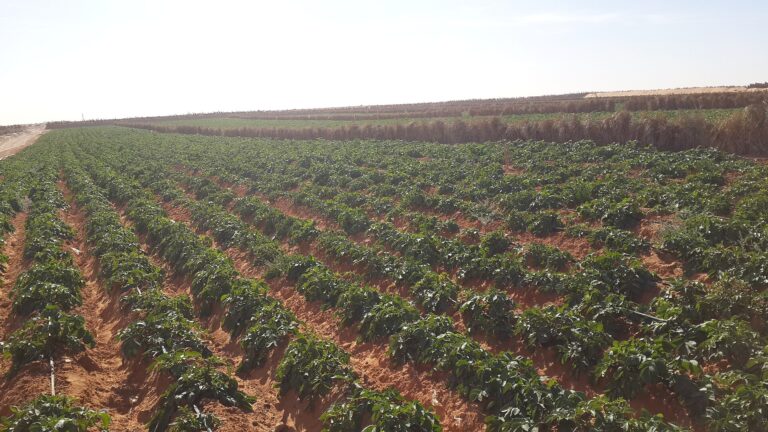
Photo: A potato field and the Yubari Mountains, Hokkaido, Japan (illustrative). pakku / Wikimedia Commons, CC OLEH 3.0
Ringkasan Kentang Global
Lima cerita, harga, amaran penyakit dan acara teratas. Pagi hari bekerja, tiada pengiklanan.
Apa selepas ini
The ministry has not yet published a full estimate for the 2025 crop in this briefing. Trade talks on access for imported fresh potatoes remain open.
Sumber
- 農林水産省 農産局地域作物課「ばれいしょをめぐる現状と課題について」令和7年12月(2025年度ポテトフォーラム資料) — https://bareishokyougikai.jp/common/files/data_suzuki.pdf
- FAOSTAT melalui Dunia Kita dalam Data, Pengeluaran Kentang — https://ourworldindata.org/grapher/potato-production
- FAOSTAT melalui Dunia Kita dalam Data, Hasil Kentang — https://ourworldindata.org/grapher/potato-yields
Dipautkan dalam bahan ini
- Negara
- Jepun
- Acara dan Program
- Potato Forum 2025
- Seksyen
- AgronomiAsiaBeritaPemprosesan
Cerita-cerita yang berkaitan
Peru: Pengeluaran Kentang Meningkat Berganda kepada 6.58 Juta Tan Sejak 2000 apabila Hasil Mencapai 19.5 tan/ha
Bolivia: Hasil Tuai Kentang Mencapai 1.38 Juta Tan tetapi Hasil Kekal Hampir 6.5 tan/ha